Why do professional salons recommend specialized hair care? The answer begins with diagnosis, not marketing. Salon professionals examine scalp oil, porosity, chemical damage, texture, and styling habits before suggesting a product. A dry, bleached strand needs different support from an oily scalp or fragile, untreated hair. Generic shampoo may clean effectively, but it rarely addresses every condition with equal precision.
Trichologist Philip Kingsley famously said, “The hair is the fastest growing tissue in the human body.” This observation explains why salons often prefer targeted formulas. Hair changes visibly after coloring, heat exposure, seasonal dryness, and repeated washing. Professional recommendations are shaped by hands-on experience, ingredient knowledge, and client feedback. A stylist may notice rough ends under bright salon lighting, or feel uneven elasticity during a simple comb-through. Small details matter.
This article introduces China’s top 10 specialized hair care brands and examines why salons consider them. The selection may include scalp treatments, repair masks, color-protection systems, and lightweight products for fine hair. It will also consider formulation transparency, professional use, ingredient suitability, manufacturing credibility, and customer experience. No ranking is absolute. A respected brand can still fail for a particular client, climate, or hair routine. That is an important limitation.
Some claims deserve closer checking. “Natural” does not automatically mean gentle, and a higher price does not guarantee better results. Salon expertise remains essential. Products work best when matched with careful assessment, realistic expectations, and consistent use.
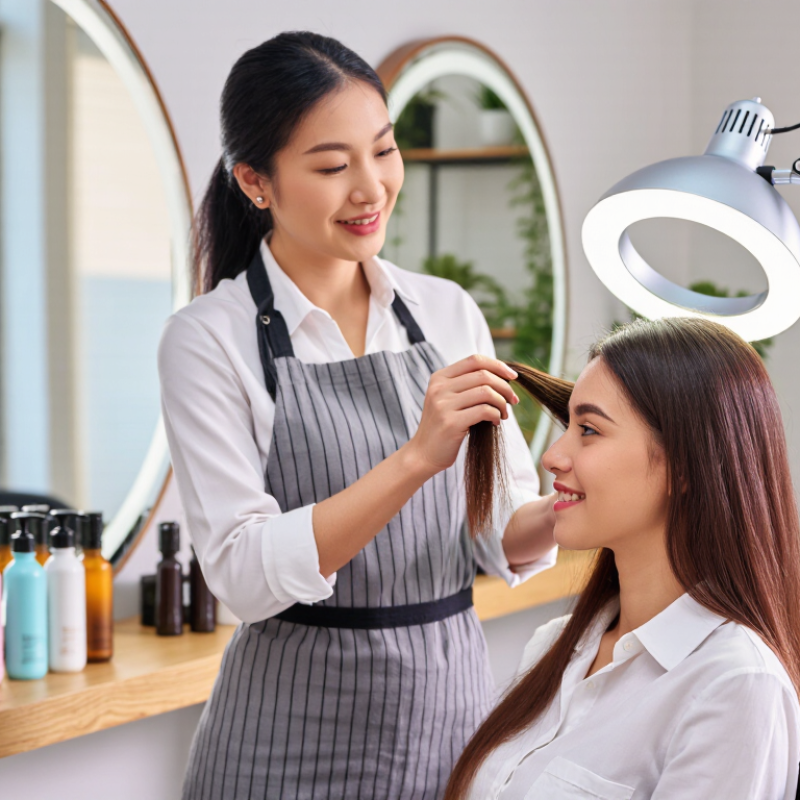
What Makes a Hair Care Brand Specialized in China?
What Makes a Hair Care Brand Specialized in China?
China’s specialized hair care market is moving beyond basic cleansing. According to iiMedia Research, China’s hair care market exceeded RMB 50 billion in 2023. This growth reflects stronger interest in scalp health, hair loss prevention, and customized treatment. However, market size alone does not prove professional value. A specialized brand should connect product design with salon diagnosis, local hair habits, and measurable results.
Salon professionals often face oily scalps, dry ends, chemical damage, and seasonal shedding in one client. Specialized formulas address these differences with clear ingredient functions, usage limits, and testing evidence. Mintel’s China beauty research highlights rising consumer interest in scalp care and efficacy claims. Yet, some claims remain too broad. More clinical transparency would improve trust. Training also matters. A stylist needs practical guidance, not only attractive packaging or technical vocabulary.
Tips: Ask for ingredient evidence, safety testing, and salon training materials. Check whether recommendations match scalp condition and treatment history. Record changes after four weeks, including oiliness, breakage, comfort, and styling time. Results may vary. That is worth admitting.
How China’s Top 10 Specialized Hair Care Brands Are Selected
Selecting China’s top 10 specialized hair care brands requires more than checking sales figures. A credible evaluation begins with salon experience, product performance, and transparent evidence. Reviewers should examine ingredient records, manufacturing controls, testing reports, and professional training support. Client needs also matter, from dry scalp concerns to color-treated hair.
Salon trials provide practical proof. Stylists can observe texture, fragrance, rinseability, and results under busy working conditions. Products should perform consistently across different hair types and water conditions. Reliable suppliers also provide batch information, usage guidance, and responsive technical support. A brand’s ranking should reflect these details, not only attractive packaging or online popularity.
Tips: Ask salons to test products for several weeks. Record application time, client feedback, and repeat-purchase interest. Compare results under the same conditions. Keep the notes specific. A soft finish is not enough. Check whether the formula protects the salon’s workflow and the client’s comfort. No ranking is perfect. Some evaluations may overlook regional preferences or smaller professional suppliers. That weakness deserves honest review, rather than confident claims.
Product Categories and Technologies Behind the Top 10 Brands
China’s top ten specialized hair care brands stand out through focused product categories, not broad promises. Salon professionals commonly assess scalp cleansers, anti-oil treatments, repairing masks, color-care systems, styling products, and heat protectants. Each category addresses a visible problem, such as brittle ends, flat roots, or an irritated scalp. The best products also support salon routines. They spread quickly, rinse cleanly, and leave manageable results between appointments.
Their technologies often combine low-pH cleansing, amino acids, ceramides, peptides, plant extracts, and bond-supporting ingredients. Some professional lines use scalp imaging or hair porosity checks before treatment. This makes product selection more evidence-based.
Texture matters too. Lightweight gels suit fine hair, while richer creams help porous strands hold moisture. I have found that repeated salon observation reveals more than a single impressive test. No formula solves every head of hair. Some claims still need stronger independent testing.
Tips:
Check the scalp before choosing a repair product. Apply masks mainly to damaged lengths, not oily roots. Test color stability after treatment. Ask how heat protection performs at the salon’s actual styling temperature. Keep records of shedding, dryness, and breakage. Small details matter.
Why Professional Salons Prefer Specialized Hair Care Brands
Professional salons prefer specialized hair care brands because their work depends on predictable results, not attractive packaging alone. In China, stylists often assess hair porosity, previous coloring, scalp condition, and daily styling habits before selecting a treatment. A dry, bleached strand may need lipid support, while fine hair can become heavy after rich conditioning. The difference is visible under salon lighting.
Specialized products also support consistent professional procedures. Clear usage directions help stylists measure treatment amounts, control processing time, and reduce unnecessary product waste. Reliable ingredient information matters during consultations. Clients may ask about fragrance, cleansing strength, or color protection. Trained staff need practical answers, not vague promises. Small details count, such as how a cream spreads through damp hair or whether it rinses clean after ten minutes.
Experience still has limits. Even skilled stylists can misjudge porosity after repeated chemical services. A strand test and careful client history can prevent an unpleasant result. Salon teams may also record product performance after each appointment, including softness, breakage, and scalp comfort. These notes improve future decisions, though they are not perfect. Hair changes with humidity, water quality, medication, and home routines. Professional care works best when specialized formulas are combined with observation, technical training, and honest communication.
How Salons Can Compare and Choose the Right Brand
China’s Top 10 Specialized Hair Care Brands: Why Salons Compare Carefully
Choosing among China’s leading specialized hair care brands requires more than attractive packaging. Salons should compare performance, safety information, training support, and supply stability. A product may create beautiful shine but fail on sensitive scalps or heavily processed hair. Ask for complete ingredient details, usage instructions, and professional testing records. Check whether the supplier explains limitations clearly. That honesty matters.
Salon teams should test products on different hair textures before making a larger purchase. Observe results after washing, heat styling, and several days of normal wear. Compare fragrance strength, application time, residue, and client comfort. A reliable supplier should provide batch information and respond quickly to technical questions. Training also matters. Even excellent formulas can disappoint when staff use incorrect amounts or processing times. My own scorecards are useful, but not perfect. Client feedback sometimes challenges the first impression.
Tips: Create a simple comparison sheet. Record product cost, service time, hair condition, and repeat-purchase results. Invite stylists to write brief notes after each trial. Review those notes monthly, not only after a successful appointment. Consider local hair needs, humidity, water quality, and common chemical services. Avoid choosing only by price. A cheaper product may require more product, more time, or extra correction work. Ask for samples first. Then test them under real salon conditions.
FAQS
It connects formulas with salon diagnosis, local hair habits, and measurable results. Market size alone proves little. Scalp needs vary widely.
Common concerns include oily scalps, dry ends, chemical damage, breakage, and seasonal shedding. One client may have several concerns together.
They should review ingredient functions, safety testing, manufacturing controls, and usage limits. Attractive packaging is not enough.
Stylists need practical instructions for different scalp conditions and treatment histories. Technical vocabulary cannot replace hands-on guidance.
Common categories include scalp cleansers, oil-control treatments, repair masks, color-care products, styling products, and heat protectants. Each should address a visible need.
Useful approaches may include low-pH cleansing, amino acids, ceramides, peptides, plant extracts, and bond-supporting ingredients. Evidence remains uneven.
Test products for several weeks under similar conditions. Record application time, rinseability, client comfort, oiliness, breakage, and styling time.
Not always. Apply richer masks mainly to damaged lengths, especially when roots become oily quickly.
Lightweight gels may suit fine hair, while richer creams can support porous strands. Texture should match the hair’s condition.
No ranking is perfect. Smaller suppliers, regional preferences, and independent testing gaps may receive too little attention. That deserves honest review.
Conclusion
China’s specialized hair care market is shaped by products designed for specific scalp and hair concerns, such as oil control, sensitivity, dryness, damage, hair thinning, and post-treatment maintenance. This article explains what makes a brand specialized, including professional research, targeted formulas, ingredient selection, safety testing, and technologies that support consistent salon results. It also introduces a practical method for selecting China’s top 10 specialized hair care brands by considering product performance, formulation expertise, professional usability, customer feedback, and suitability for different salon services.
Professional salons prefer specialized brands because targeted products can improve treatment precision, create more consistent results, and help stylists address individual client needs. The article explores why do professional salons recommend specialized hair care, while also reviewing key categories such as shampoos, conditioners, masks, scalp treatments, serums, and professional repair systems. Finally, it provides a comparison framework covering formula quality, service support, training, pricing, product compatibility, and long-term client satisfaction, helping salons choose solutions that match their positioning and customers.

 SALA Beauty