Choosing products for a natural hair care business involves more than selecting attractive labels. Customers examine ingredients, performance, sourcing, and safety before trusting a brand. A product may look gentle yet contain allergens, unclear botanical blends, or weak supplier documentation.
This guide explains how to choose natural hair care products with practical business needs in mind. Start by identifying your customers’ hair textures, scalp concerns, climate, and styling habits. A lightweight leave-in conditioner may suit fine, humid-weather hair, while dense curls may need richer oils or creams. Review the full INCI ingredient list, not just front-label claims. Request certificates, batch records, safety data, and stability testing from suppliers. Reliable evidence matters.
Test before scaling.
Small sample trials can reveal separation, unpleasant residue, fading fragrance, or packaging leaks. Ask several users to record results after washing, drying, and repeated application. Their feedback may challenge your assumptions. No formula is perfect. Even a popular ingredient can perform differently across hair types and sensitivities. That is an important limitation.
Responsible purchasing also requires checking labeling rules, claims, and market-specific requirements. “Natural” does not automatically mean safe, effective, or legally acceptable everywhere. Consult qualified cosmetic professionals when evidence is unclear. Compare supplier transparency, manufacturing standards, minimum order quantities, and replacement policies. A dependable product should satisfy customers and withstand careful review. This approach supports stronger decisions, clearer communication, and a more trustworthy business.
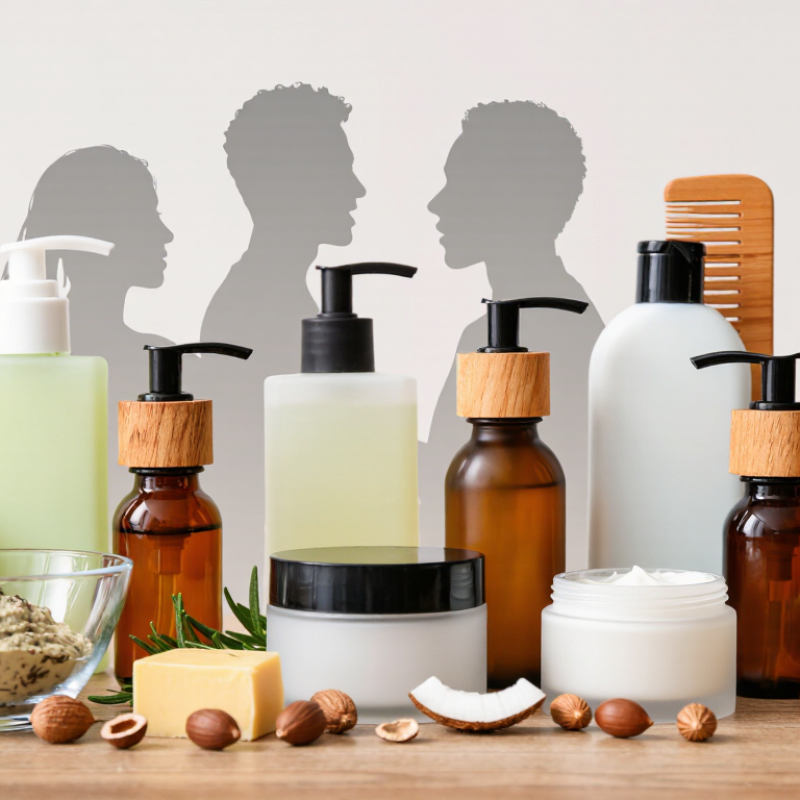
In 2024, natural hair-care businesses should define their customer before selecting ingredients. Statista Consumer Market Insights estimates global hair-care revenue at about $91 billion in 2024. That figure shows demand, not guaranteed demand for your product. Market definitions also vary.
Customer research should include hair texture, scalp concerns, climate, budget, and washing habits. A salon owner might serve clients needing lightweight hydration in humid weather. An online retailer may attract customers seeking fragrance-free products for sensitive scalps.
Keep interviews specific. Ask what customers used last week, not what they might buy someday. I would not treat “natural” as a complete product goal. It sounds appealing, but it can mean different things to different shoppers.
Grand View Research valued the global natural hair-care market at approximately $6.65 billion in 2023 and projected strong growth through 2030. However, its category boundaries differ from other reports. Use the data directionally, then test small batches with clear measures: repeat purchase rate, complaint frequency, cleansing performance, and customer satisfaction after four weeks. Product claims should match documented ingredients and testing. Avoid promising universal results. My initial product idea might still be wrong. Customer feedback should have permission to change it.
How to Choose Natural Hair Care Products for Your Business?
“Natural” does not automatically mean compliant. The 2023 Cosmetics Europe Market Performance report valued Europe’s cosmetics market at €79.8 billion. That scale increases scrutiny across every ingredient and claim. Build a screening file for each formula. Record the INCI name, supplier documents, concentration, function, and country of origin. Check FDA requirements first. In the United States, cosmetics generally do not need premarket approval, except for color additives. However, the Modernization of Cosmetics Regulation Act requires facility registration and product listing for many businesses. Safety responsibility remains with the company.
For EU sales, Regulation (EC) No 1223/2009 requires a Responsible Person, Product Information File, Cosmetic Product Safety Report, and notification through the Cosmetic Products Notification Portal. Review Annex II prohibited substances and Annex III restricted substances. Confirm fragrance allergens, preservatives, colorants, and impurities carefully. A botanical extract can vary between harvests. That detail is easy to miss. Keep batch specifications and contaminant testing available.
I have seen teams trust a supplier’s “clean” certificate too quickly. That is not enough evidence. Compare the formula against current FDA guidance and EU amendments before approval. The European Commission’s CosIng database helps identify ingredient functions, but it does not replace a safety assessment. The Personal Care Products Council’s 2024 industry resources also stress documentation and responsible claims. Avoid promising hair growth or medical treatment without appropriate evidence. One unclear claim can weaken an otherwise careful product file. Recheck every formula when regulations, suppliers, or packaging change.
Choosing natural hair care products for your business requires more than reading “clean” or “plant-based” on a label. These phrases may lack consistent meaning. COSMOS certification offers a clearer way to assess organic and natural claims.
When reviewing a product, look for the approved COSMOS designation and the name of an independent certification body. COSMOS standards examine ingredient origins, manufacturing processes, environmental practices, packaging, and product labeling. They also distinguish between natural and organic categories. This difference matters when your customers expect verified organic content, not just botanical ingredients.
Ask suppliers for current certificates, ingredient lists, and supporting documentation. Check whether the certificate covers the exact product, not merely the supplier’s wider product range.
From practical purchasing experience, this small detail can prevent confusing claims on shelves. It also helps staff answer customer questions with confidence.
Certification does not guarantee that a shampoo will suit every scalp or perform perfectly in every climate. Test samples before placing large orders.
Observe texture, fragrance, rinsing, and packaging durability. Keep records of your evaluation.
Some formulas may feel less familiar at first, and personal preference can influence judgment. I have found that transparent documentation often matters more than attractive wording, although I still need to question incomplete records and vague percentages. Your buying process should leave room for that doubt.
Natural positioning can attract customers, but product claims need measurable support. ISO 16128 provides definitions for natural and organic-derived ingredients. It does not certify product safety, effectiveness, or overall quality. Treat it as a classification tool, not a performance guarantee.
Compare formulas with the same testing questions. Ask for ISO 16128 calculations, ingredient percentages, and testing methods. A shampoo containing 95% naturally derived content may still perform poorly on oily hair. Check cleansing ability, foam behavior, combing force, scalp comfort, and residue after repeated use. Small salon trials can reveal problems that laboratory data misses.
Stability evidence matters. Review real-time results, accelerated testing, freeze-thaw cycles, light exposure, and packaging compatibility. Watch for separation, color changes, odor shifts, viscosity loss, or leaking caps. Microbial testing should match the formula and container. Preservative challenge testing is useful, but it does not replace good manufacturing controls.
Use technical reports from qualified laboratories, with test dates, sample details, and acceptance limits. Avoid vague statements such as “tested for stability.” Ask how long the test lasted and under which conditions. My practical concern is simple: accelerated testing can predict risks, but it cannot perfectly recreate two years in a humid bathroom. That uncertainty deserves honest planning. Keep retained samples from each batch, record customer feedback, and repeat testing when the formula, supplier, or packaging changes. Reliability is built through evidence, not attractive percentages.
Choosing natural hair care products for your business starts with numbers, not attractive packaging. Before contacting suppliers, calculate the full landed cost for each product. Include the unit price, testing, freight, customs, storage, labels, and payment fees. A product priced at $4 may cost $6.20 after delivery and compliance work. Small charges become serious at 1,000 units.
Keep a simple spreadsheet. Record minimum order quantities, lead times, sample fees, and expected waste. Then estimate your gross margin using your realistic selling price, not an optimistic one. If your retail price is $18 and total cost is $6.20, the gross margin is about 65.6 percent. That may sound healthy. It may not be. Advertising, staff, returns, and marketplace fees can reduce it quickly. I have learned that overlooked costs often hurt more than high supplier prices.
Compliance must be checked before selecting a supplier. Request complete ingredient lists, batch records, safety documents, allergen information, and product testing evidence. Confirm that packaging claims, such as “organic” or “chemical-free,” are accurate and permitted in every target market. Requirements can differ by country and product category, so verify them with qualified local professionals. Ask who owns the formula and who handles recalls or quality complaints. Get answers in writing. A supplier may appear reliable during a sales call, yet provide incomplete documents later. That weakness should affect your margin calculation and purchasing decision.
Terms like “clean” or “plant-based” may have inconsistent meanings. Independent certification can verify ingredient origins, production methods, packaging, and labeling. Words alone are weak evidence.
Request current certificates, complete ingredient lists, batch records, safety documents, allergen details, and testing reports. Confirm the certificate covers the exact product, not only the supplier’s wider range. Missing records should reduce your confidence.
No. Certification does not guarantee scalp comfort, cleansing strength, or performance in every climate. Test samples for texture, fragrance, rinsing, residue, and packaging durability. Keep written evaluation records.
Use the same questions for every sample. Check naturally derived ingredient percentages, cleansing ability, foam behavior, combing force, scalp comfort, and residue. A high percentage may still perform poorly on oily hair.
Ask for real-time testing, accelerated testing, freeze-thaw cycles, light exposure, and packaging compatibility results. Review test dates, sample details, and acceptance limits. “Stability tested” is too vague.
Look for separation, color changes, odor shifts, thinner texture, leaking caps, or damaged labels. Microbial testing should match the formula and container. Accelerated testing predicts risks, but it cannot perfectly recreate two years in a humid bathroom.
Add unit price, testing, freight, customs, storage, labels, payment fees, and expected waste. A $4 product may reach $6.20 after delivery and compliance work. Small charges matter at 1,000 units.
Calculate gross margin using a realistic selling price. Include advertising, staff costs, returns, and marketplace fees. A 65.6 percent gross margin can shrink quickly. I still underestimate hidden costs sometimes.
Verify product documents, ownership of the formula, recall responsibility, complaint handling, minimum quantities, and lead times. Test samples first and retain batch samples later. Change the formula, supplier, or packaging? Repeat testing.
Choosing natural hair care products for a business requires a structured approach based on customer needs, product objectives, and current 2024 hair-care market trends. To understand how to choose natural hair care products, businesses should first identify their target customers, preferred formats, ingredient expectations, price range, and performance priorities. Each formula should then be reviewed for ingredient safety and assessed against applicable cosmetic requirements, including FDA guidelines and EU Regulation 1223/2009.
Natural and organic claims should be supported by recognized certification criteria, such as COSMOS standards, rather than vague marketing language. Product quality should also be evaluated through ISO 16128 guidance, laboratory testing, stability studies, and evidence of performance during storage and use. Finally, businesses should compare supplier pricing, minimum order quantities, production timelines, testing expenses, packaging costs, compliance responsibilities, and expected profit margins. This process helps companies select reliable products that meet customer expectations while supporting safety, transparency, and long-term commercial viability.

SALA Beauty